

Professor João Gomes (DEQ/ISEL) has recently obtained international registration as an Education Researcher under the ENTER International Professional Educator Register. This recognition distinguishes faculty members who excel in educational research, applying innovative pedagogical practices and contributing to the improvement of Higher Education.João Gomes is a Coordinating Professor with Aggregation at ISEL and an integrated researcher at the FCT unit CERENA – Center for Natural Resources and Environment/Instituto Superior Técnico/University of Lisbon. Between 2021 and 2025, he served as Vice-President of ISEL for the scientific area, R&D, and projects. In 2025, he was awarded the EUR-ING title (European Engineer, Ingénieur Européen, Europa-Ingenieur) by Engineers Europe – the European Federation of National Engineering Associations.ENTER (EngineeriNg educaTors pEdagogical tRaining) is a global initiative that promotes pedagogical excellence in engineering education, certifying trainers who meet high standards of technical and teaching competence. Through the International Professional Register of Engineering Educators, it grants internationally recognized credentials such as iPEER (International Professional Engineering Educator Registered), which validates the professional quality of engineering educators. Within this register, the Education Researcher profile is reserved for faculty members who conduct relevant research in education, publish results, participate in projects, and apply innovative methodologies in teaching.
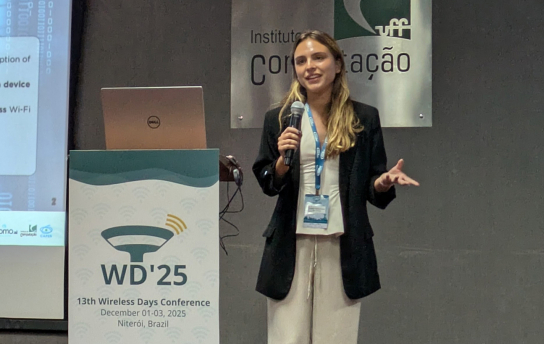
Renata Martins Castanheira, a student of the Bachelor's Degree in Computer Science and Computer Engineering (LEIC) at ISEL, participated this week in the 13th Wireless Days Conference, one of the most relevant international events in the field of wireless networks. The conference took place from December 2 to 4 in Niterói, Rio de Janeiro, Brazil, bringing together researchers and professionals from around the world to discuss technological advances and future challenges.Renata presented two papers resulting from a research project developed at ISEL, entitled “Automatic Planning of Dense Wi-Fi Networks”, which aims to create a methodology and an automated tool to optimize the installation of Wi-Fi access points in large-scale networks. This is an introductory research project in which the student participates voluntarily, collaborating in all stages: developing the planning methodology, implementing the corresponding software, testing, and writing scientific papers.The presented papers were:“Empirical study on the adoption of different Wi-Fi versions: a case study in Lisbon”, a short paper presenting the results of an empirical analysis of the adoption of different Wi-Fi technology versions in Lisbon. The goal is to identify to what extent the latest Wi-Fi versions are actually in use and to analyze the expected time for adopting new versions. The study was based on data collected in various shopping centers and universities across Lisbon and at the airport.“WiFiCoverage: A Fast and Accurate Tool for Automatic Indoor Coverage Analysis”, a paper describing a tool for analyzing Wi-Fi signal coverage in indoor environments. The presented tool offers several advantages over the state of the art, with its main features being low error in the generated analysis data and short execution time.
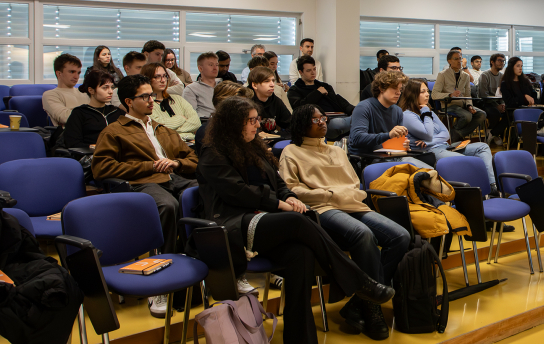
From December 2 to 5, ISEL hosted the U!Innovate Winter School, an initiative promoted by the Polytechnic University of Lisbon (IPL), organized within the scope of the European project U!Innovate and focused on developing entrepreneurship skills.The initiative featured active participation from professors at ISEL, the Lisbon School of Health, Frankfurt University of Applied Sciences, Odessa National Economic University, and Amsterdam University of Applied Sciences. They led technical workshops, mentoring sessions, and co-creation activities, reinforcing the multidisciplinary approach essential to technology- and socially-based entrepreneurship.Over four days, students, faculty, and researchers from Germany, the Czech Republic, Ukraine, the Netherlands, and Portugal engaged in an intensive experience aimed at creating innovative solutions and developing business ideas. The Winter School included practical sessions and collaborative challenges dedicated to entrepreneurial thinking, business models, funding, and idea validation. Participants worked on real proposals presented by external partners, applying innovation methodologies, design thinking, and agile development to transform problems into business opportunities.In the end, the group was divided into multicultural teams and challenged to develop an innovative solution that would promote climate neutrality and drive the creation of smart cities. Students Duarte Fonseca and Sofia Salgado, from the 3rd year of the Bachelor's degree in Computer Engineering and Multimedia, were part of the team that delivered the winning pitch, proposing the creation of TrashMates, an application that turns urban waste collection into a gamified experience through augmented reality, encouraging users to clean the streets and earn both virtual and real rewards, such as discounts in supermarkets and public transportation.Check out the photo album on Flickr.Photograph of the winning team provided by the students.
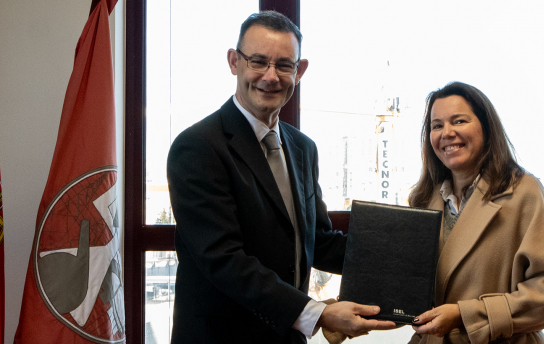
As of December 1, 2025, Professor Elisabete Alegria assumes the role of Vice-President of ISEL, with responsibility for the scientific area, research and development (R&D), and projects.As part of this redefinition of areas of responsibility, Professor Pedro Silva, who until now served as Vice-President overseeing the area that Professor Alegria will now manage, will take charge of infrastructures and equipment.Prior to this appointment, Professor Elisabete Alegria had already contributed to the institution’s strategic development as an advisor for the scientific area and projects.